Teleportation research is a fascinating field that delves into the intriguing world of quantum mechanics, where the idea of instantaneously moving objects from one location to another challenges our understanding of physics. This concept, once relegated to the realm of science fiction, is now being explored through rigorous scientific inquiry, offering potential breakthroughs that could revolutionize transportation and technology.
As researchers investigate the principles of teleportation and its implications, we gain insights into how this technology might alter our perception of distance and connectivity. Current experimental studies are pushing the boundaries of what is possible, while ethical and societal considerations regarding teleportation promise to spark important discussions about the future of human experiences.
Teleportation in Natural and Physical Sciences
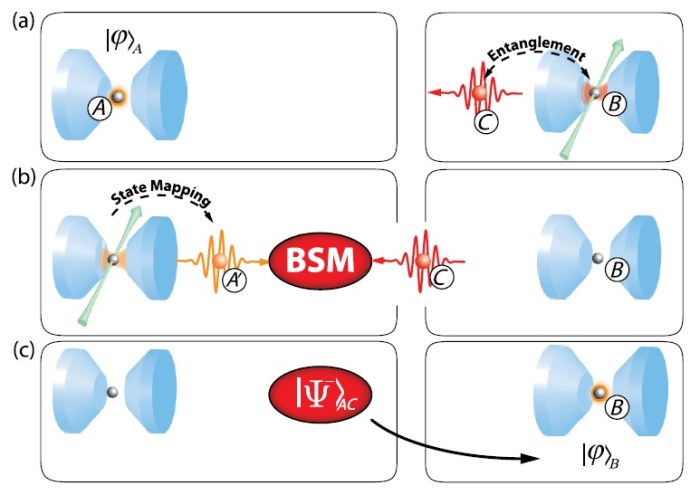
Teleportation—a concept often relegated to the realm of science fiction—has sparked serious interest within the scientific community, particularly in quantum physics. As researchers explore this phenomenon, they uncover profound implications for our understanding of matter, energy, and the very fabric of reality. This segment delves into the principles of teleportation, its potential ramifications on physical laws, and current experimental studies that push the boundaries of this intriguing subject.The principles of teleportation are grounded in the phenomena of quantum entanglement and superposition.
Quantum teleportation does not involve the physical transfer of objects but rather the transfer of quantum states. When two particles become entangled, the state of one particle instantaneously influences the state of the other, regardless of the distance separating them. This phenomenon is encapsulated in the famous equation derived from quantum mechanics, where the state of a quantum bit (qubit) can be described as a linear combination of its possible states, enabling the theoretical underpinnings of teleportation.
Implications of Teleportation Technology on Physical Laws
The exploration of teleportation technology raises significant questions regarding the fundamental laws of physics. If teleportation becomes viable, it could challenge our current understanding of locality and causality. The implications may include:
- Redefinition of information transfer: Teleportation could lead to new methods of data communication that bypass traditional constraints imposed by the speed of light.
- Impact on energy conservation: Theoretically, teleportation could allow for the transfer of energy without the loss typically associated with conventional transportation methods.
- Reevaluation of space-time: Teleportation challenges conventional concepts of distance and time, suggesting a more interconnected universe than previously understood.
The potential to influence these fundamental aspects of physics invites both excitement and skepticism, as scientists work to reconcile these concepts with established theories.
Current Experimental Studies in Teleportation Research
Several cutting-edge studies are currently underway to investigate the feasibility of teleportation and its applications. These experimental endeavors focus primarily on quantum systems and involve several key projects:
- The National Institute of Standards and Technology (NIST) has conducted experiments using entangled photons to demonstrate quantum teleportation over increasing distances, contributing to advancements in quantum networks.
- Researchers at the University of Science and Technology of China successfully teleported the quantum state of a photon across a distance of over 500 kilometers, showcasing significant strides in long-distance quantum communication.
- In Europe, the Quantum Internet Alliance is exploring teleportation as a means to create a secure quantum internet capable of transmitting information instantaneously across vast distances.
These studies highlight the feasibility of teleportation technology and its potential applications, paving the way for groundbreaking advancements in communication and computing.
“Quantum teleportation represents a fundamental shift in our understanding of information transfer and physics.”
Social and Empirical Sciences in Teleportation Research
In exploring the intersection of teleportation technology with social and empirical sciences, we uncover significant implications for society. The advent of teleportation could revolutionize transportation systems, alter social interactions, and challenge ethical frameworks. This exploration covers the societal impacts, ethical considerations, and cultural representations surrounding teleportation.
Societal Impacts of Teleportation Technology on Transportation Systems
The potential integration of teleportation into existing transportation networks could lead to transformative shifts in how society functions. The efficiency of travel would increase dramatically, resulting in reduced traffic congestion and environmental benefits due to fewer vehicles on the road.
- Reduction in Travel Time: Teleportation would minimize the time spent commuting, allowing individuals to engage more in their personal and professional lives. Imagine a daily commute from New York to Los Angeles taking mere seconds instead of hours.
- Environmental Sustainability: By eliminating traditional transportation methods, teleportation could significantly reduce carbon emissions and fossil fuel dependence, contributing to a healthier planet.
- Economic Shifts: The transportation industry would undergo radical changes, potentially leading to job displacement in traditional sectors while simultaneously creating new opportunities in teleportation technology and infrastructure development.
Ethical Considerations Surrounding Teleportation Experiences
As with any transformative technology, teleportation raises ethical questions that must be addressed. The implications of individuals deciding to teleport, especially concerning safety and consent, are critical to consider.
- Safety Protocols: Ensuring the safety of users during teleportation processes is paramount, and ethical frameworks must be established to manage risks effectively.
- Equity of Access: There is a concern that teleportation technology might only be accessible to affluent populations, exacerbating existing social inequalities.
- Identity and Continuity: The philosophical implications surrounding personal identity and the continuity of self must be examined, especially if teleportation involves disassembly and reassembly of matter.
Public Perception and Cultural Representations of Teleportation in Media
Public perception of teleportation is heavily influenced by its portrayal in various forms of media, including film, literature, and television. These representations often shape societal attitudes towards the technology.
- Entertainment Influence: Movies like “Star Trek” and “The Fly” present teleportation in diverse contexts, ranging from practical to cautionary tales, influencing how society views its potential.
- Cultural Symbolism: Teleportation serves as a symbol of advancement and futuristic thinking, but it also evokes fears of the unknown, as seen in various dystopian narratives.
- Public Engagement: Media representations facilitate discussions about the implications of teleportation, stimulating public interest and debate over ethical considerations and practical applications.
Teleportation in Education and Training

The integration of teleportation concepts into education and training provides a dynamic framework for engaging students in science and technology. By incorporating theoretical frameworks and practical activities, educators can foster a deep understanding of both the scientific principles underlying teleportation and its potential applications in real-world scenarios. This approach not only enhances student knowledge but also promotes critical thinking and innovation in scientific inquiry.
Curriculum Module Design
A well-structured curriculum module can effectively introduce teleportation concepts to students across various educational levels. The module should cover fundamental principles of physics, quantum mechanics, and the philosophical implications of teleportation. Essential topics to include are:
- Introduction to Quantum Mechanics: Students learn the basic tenets of quantum theory, including superposition and entanglement, which serve as the foundation for understanding teleportation.
- Historical Context: A review of teleportation in science fiction versus its scientific basis helps students appreciate the evolution of the concept.
- Teleportation Technology: Exploration of current advancements in teleportation research, including quantum teleportation and its implications for communication and computing.
Activities to Enhance Understanding
Hands-on activities and experiments can significantly enhance students’ comprehension of teleportation phenomena. These activities should encourage exploration, creativity, and teamwork. Suggested activities include:
- Quantum Simulation: Students use computer simulations to visualize quantum entanglement and teleportation processes, enabling them to witness phenomena that are otherwise difficult to observe.
- Role-Playing Exercise: Create a scenario where students must represent subatomic particles engaging in teleportation. This interactive exercise promotes critical thinking about the implications of teleportation.
- Concept Mapping: Students develop concept maps that connect various aspects of teleportation, including its scientific basis, potential applications, and societal impact.
Engaging Students with Real-World Applications
Connecting teleportation research with real-world applications is essential for stimulating student interest and understanding. Highlighting practical applications can demonstrate the relevance of theoretical concepts. Key methods for engagement include:
- Guest Lectures: Invite experts in quantum physics and teleportation research to share their insights and experiences, allowing students to ask questions and interact with professionals in the field.
- Field Trips: Organize visits to laboratories or institutions conducting cutting-edge research in quantum physics and teleportation technologies, offering students firsthand exposure to the field.
- Research Projects: Encourage students to explore current research articles or studies related to teleportation, analyzing and presenting their findings to the class.
“Education is the most powerful weapon which you can use to change the world.”
Nelson Mandela
Final Wrap-Up
In summary, teleportation research is not just a scientific pursuit; it embodies a profound leap into the unknown, merging theoretical principles with practical applications. As we continue to unravel the mysteries of teleportation, we must also navigate the ethical landscapes it presents, ensuring that advancements benefit society as a whole. The journey into this uncharted territory invites us to envision a future where the boundaries of travel and transportation are redefined.
FAQ Guide
What is teleportation in quantum physics?
Teleportation in quantum physics refers to the transfer of quantum states from one particle to another without moving the physical particles themselves.
How does teleportation differ from traditional transportation?
Teleportation allows for instantaneous relocation of information or states rather than the physical movement of objects, as seen in traditional transportation methods.
What are the current limitations of teleportation research?
Current limitations include the challenges of accurately transmitting and reconstructing quantum states, as well as the need for advanced technologies to facilitate such processes.
How might teleportation impact daily life?
If developed, teleportation could revolutionize travel, reduce transportation costs, and drastically change logistics and supply chains.
Are there ethical concerns surrounding teleportation technology?
Yes, ethical concerns include issues of identity, privacy, and the potential for misuse of teleportation technology in harmful ways.