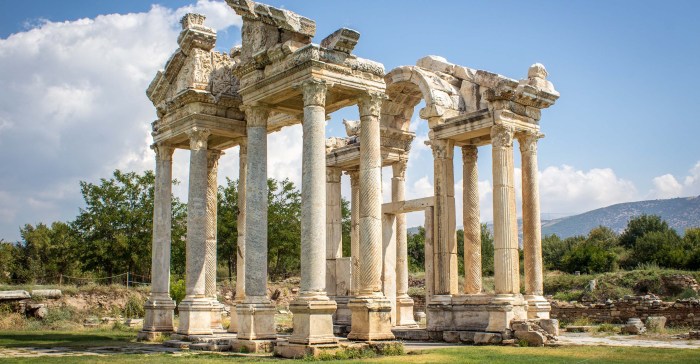
Ancient advanced civilizations have long fascinated historians and enthusiasts alike, with their remarkable achievements and complex societies that laid the groundwork for modern civilization. From the intricate pyramids of the Maya to the sophisticated urban planning of the Indus Valley, these cultures were not just advanced for their time but continue to inspire awe today.
Examining the defining characteristics of these civilizations reveals a tapestry of innovation, social structure, and cultural richness that has shaped human history. As we delve into examples like the Mesopotamians, we uncover the incredible contributions they made to mathematics, astronomy, and governance that resonate in contemporary society.
Overview of Ancient Advanced Civilizations
Ancient advanced civilizations represent a significant chapter in human history, showcasing the remarkable achievements and innovations of societies that laid the groundwork for modern culture, governance, and technology. These civilizations are characterized by their complex social structures, advanced knowledge in various fields, and significant contributions to human development.Among the most notable advanced civilizations are the Maya, Mesopotamians, and the Indus Valley civilization.
Each of these societies exhibited unique characteristics that distinguished them as leaders in their respective eras. Their contributions to fields such as mathematics, astronomy, architecture, and urban planning continue to influence contemporary society in myriad ways.
Defining Characteristics of Ancient Advanced Civilizations
Ancient advanced civilizations typically exhibit several defining features that highlight their sophistication and development. These characteristics include an organized government, economic systems, social hierarchies, and cultural achievements.
- Urban Centers: Advanced civilizations developed cities that served as cultural and political hubs, often featuring monumental architecture and infrastructure.
- Writing Systems: The invention of writing enabled these societies to document their history, laws, and cultural practices, fostering communication and record-keeping.
- Specialized Labor: With surplus production, individuals could specialize in various trades, leading to advancements in art, science, and technology.
- Complex Religions: Spiritual beliefs often played a central role, influencing daily life, governance, and the arts.
- Trade Networks: These civilizations engaged in extensive trade, exchanging goods and ideas, which enriched their cultural and economic landscapes.
Examples of Advanced Civilizations
The Maya civilization, flourishing in Mesoamerica, is renowned for its sophisticated calendar systems, impressive architectural feats such as pyramids, and advanced knowledge in agriculture. Their contributions to mathematics and astronomy laid the groundwork for future scientific advancements. The Mesopotamians, often called the “cradle of civilization,” are credited with developing the first known writing system, cuneiform, and establishing one of the earliest forms of government.
They made significant strides in mathematics and engineering, evident in the construction of ziggurats and the development of irrigation systems that enhanced agricultural productivity.The Indus Valley civilization, known for its urban planning, featured cities like Harappa and Mohenjo-Daro, characterized by grid patterns and sophisticated drainage systems. They excelled in metallurgy and trade, influencing subsequent cultures through their innovations.
“The achievements of ancient advanced civilizations continue to shape modern society, reminding us of our shared heritage and the enduring legacy of human ingenuity.”
Social and Empirical Sciences in Ancient Civilizations
The social and empirical sciences played a pivotal role in the development of ancient civilizations. These aspects shaped governance, culture, and the overall functioning of society. By examining social structures and the methodologies employed to understand their environments, we gain insight into how these societies thrived and adapted over time.The social structures of ancient civilizations varied greatly, yet they shared common elements that influenced governance and culture.
Hierarchies defined the relationships between different social classes, and these hierarchies were often reflected in political systems and cultural practices. Understanding these structures provides a lens through which we can analyze the operation of ancient societies.
Social Structures and Governance
Social hierarchies in ancient civilizations were marked by distinct roles that influenced governance and the distribution of power. The presence of ruling classes, such as monarchs, nobles, and priests, indicated a structured approach to leadership and societal organization. The following key points illustrate the significance of social structures:
- Ruling Class: Often comprised of kings, queens, and nobility who exercised considerable power over land and resources, influencing the laws and policies of the society.
- Religious Authority: Priests and religious leaders played crucial roles in governance, often acting as intermediaries between deities and the populace, impacting social norms and cultural practices.
- Commoners and Laborers: The majority of the population included farmers, artisans, and laborers who provided the economic foundation for civilization, yet had limited political power.
- Slavery: In many ancient societies, enslaved individuals were a part of the social fabric, often utilized for labor and household services, further entrenching social hierarchies.
Understanding these roles helps illuminate the complexities of governance and social interaction within each civilization.
Empirical Methodologies in Ancient Civilizations
Ancient civilizations employed various empirical methodologies to comprehend and interact with their environments. These methodologies laid the groundwork for advancements in agriculture, astronomy, and medicine, showcasing the innovative spirit of these societies.Key empirical approaches included:
- Observation: Ancient peoples closely observed celestial bodies and seasonal changes, leading to the development of calendars and agricultural practices aligned with weather patterns.
- Experimentation: Techniques in metallurgy and pottery involved trial and error, which improved production methods and quality of goods.
- Record Keeping: The use of writing systems like cuneiform in Mesopotamia and hieroglyphics in Egypt allowed for the documentation of agricultural yields, trade transactions, and religious texts, facilitating knowledge transfer across generations.
- Mathematics and Astronomy: Civilizations such as the Maya and Greeks advanced mathematical concepts, enabling the construction of monumental architecture and enhanced agricultural planning based on precise astronomical calculations.
These methodologies not only reflects their ability to adapt but also their quest for understanding, which has echoed throughout history as civilizations continued to evolve.
Importance of Social Hierarchies and Roles
Social hierarchies significantly influenced the functioning and stability of ancient civilizations. The roles individuals occupied within these hierarchies dictated their access to resources, education, and political power, thereby shaping their experiences and opportunities.The significance of social roles can be highlighted through several aspects:
- Division of Labor: Specialization in crafts and professions allowed for advancements in technology and culture, as individuals contributed their unique skills to the community.
- Social Cohesion: Defined roles fostered a sense of belonging and duty among members of a society, promoting stability and reducing conflict.
- Cultural Identity: Social roles informed cultural practices, traditions, and values, creating a shared identity that helped unify diverse populations.
- Mobility and Change: While hierarchies were often rigid, some civilizations allowed for social mobility, enabling individuals to rise through the ranks based on merit or achievement, exemplifying the dynamic nature of these societies.
Understanding the intricacies of social hierarchies and roles in ancient civilizations reveals how these structures not only influenced governance but also shaped the culture and identity of societies across history.
Anomalies and Alternative Science Related to Ancient Civilizations
The exploration of ancient civilizations has unveiled a plethora of intriguing anomalies that challenge our conventional understanding of history. These anomalies often stem from archaeological findings that do not fit neatly into established narratives. Alternative science and theories have emerged, proposing new perspectives on the origins and technologies of these advanced societies. This discussion delves into some of these captivating anomalies and how they contrast with mainstream archaeological interpretations.
Alternative Theories on Origins and Technologies
Several alternative theories suggest that ancient civilizations possessed knowledge and technologies far more advanced than what traditional archaeology has acknowledged. One prominent theory posits that ancient cultures might have had access to lost technologies, such as energy sources or construction techniques that defy current understanding. For instance, the construction of the Great Pyramid of Giza, which remains one of the most remarkable engineering feats, has led to various hypotheses.
Some suggest that the ancient Egyptians utilized sophisticated tools or even advanced knowledge of physics that has since been lost. This contrasts sharply with mainstream views that attribute the pyramid’s construction solely to a large workforce and simple tools.
Unexplained Archaeological Findings
Archaeological sites around the world have revealed findings that challenge accepted historical timelines and narratives. These discoveries raise questions about the capabilities and achievements of ancient civilizations.Some notable examples include:
- Gobekli Tepe: Dating back to around 9600 BCE, this site in modern-day Turkey features massive stone pillars arranged in circles. Its complexity suggests advanced social organization long before the advent of agriculture, contradicting the notion that such societies only arose after farming was established.
- Antikythera Mechanism: Discovered in a shipwreck off the coast of Greece, this ancient analog computer dates back to around 150-100 BCE. Its intricate design and functionality for astronomical calculations have led some to argue for a lost knowledge of mechanics and astronomy in ancient times.
Mainstream vs. Alternative Scientific Perspectives
The discourse between mainstream archaeology and alternative scientific perspectives often centers on interpretations of evidence and the implications of certain findings. While mainstream archaeology tends to adhere to a framework based on gradual developments and cultural progression, alternative theories often explore the possibility of external influences or lost civilizations.For example, proponents of the ancient astronaut theory argue that contact with extraterrestrial beings could explain the advanced technologies observed in ancient structures.
Conversely, traditional archaeologists emphasize human ingenuity and cultural evolution as sufficient explanations for these achievements. This ongoing debate highlights the complexity of interpreting archaeological evidence and the diverse narratives that can emerge from it.
“These anomalies not only challenge our understanding of ancient civilizations but also inspire a re-examination of the capabilities and knowledge of our ancestors.”
Final Conclusion

In conclusion, the study of ancient advanced civilizations provides a profound insight into humanity’s capacity for innovation and adaptation. As we explore their legacies, it becomes clear that these societies not only overcame the challenges of their time but also set the stage for future generations to thrive. Their stories remind us of the enduring spirit of human achievement and the mysteries that still await discovery.
FAQ Guide
What are some characteristics of ancient advanced civilizations?
Ancient advanced civilizations typically displayed sophisticated urban planning, advanced technologies, complex social hierarchies, and significant contributions to arts and sciences.
How did ancient civilizations influence modern society?
These civilizations contributed foundational concepts in governance, mathematics, engineering, and writing, many of which are still relevant and utilized today.
What are some examples of unexplained archaeological findings?
Examples include the Nazca Lines in Peru and the Antikythera Mechanism in Greece, both of which challenge conventional understandings of technology and societal capabilities of their times.
What alternative theories exist regarding ancient civilizations?
Some alternative theories suggest extraterrestrial influences or lost advanced technologies that contributed to the development of these societies, although they are often met with skepticism.
How did social hierarchies impact ancient civilizations?
Social hierarchies played a crucial role in governance and cultural practices, influencing everything from resource distribution to religious practices and social mobility.